

Research
Digital SEO Land is now EvenSurge.

Search is changing faster than most brands can track it. Every week, a client asks us the same question: are people still using Google, or has everyone moved to ChatGPT?
In November 2026, Kevin Indig, one of the most respected voices in SEO and organic growth, published his AI Search Meta Analysis for Q4 2026. He reviewed 52 studies on AI search to build a clear picture of what we actually know today. It is one of the most useful pieces of research our industry has right now.
We read it closely. Then our team at EvenSurge went a step further. We set his findings next to the newest data from OpenAI, Google and independent traffic studies to answer one question for our clients: how do people really use AI for search, and what should brands do about it?
Here is what we found.
Kevin’s main finding is simple. AI is changing the path from first search to final decision, both inside Google and inside chatbots. Here is how that plays out.
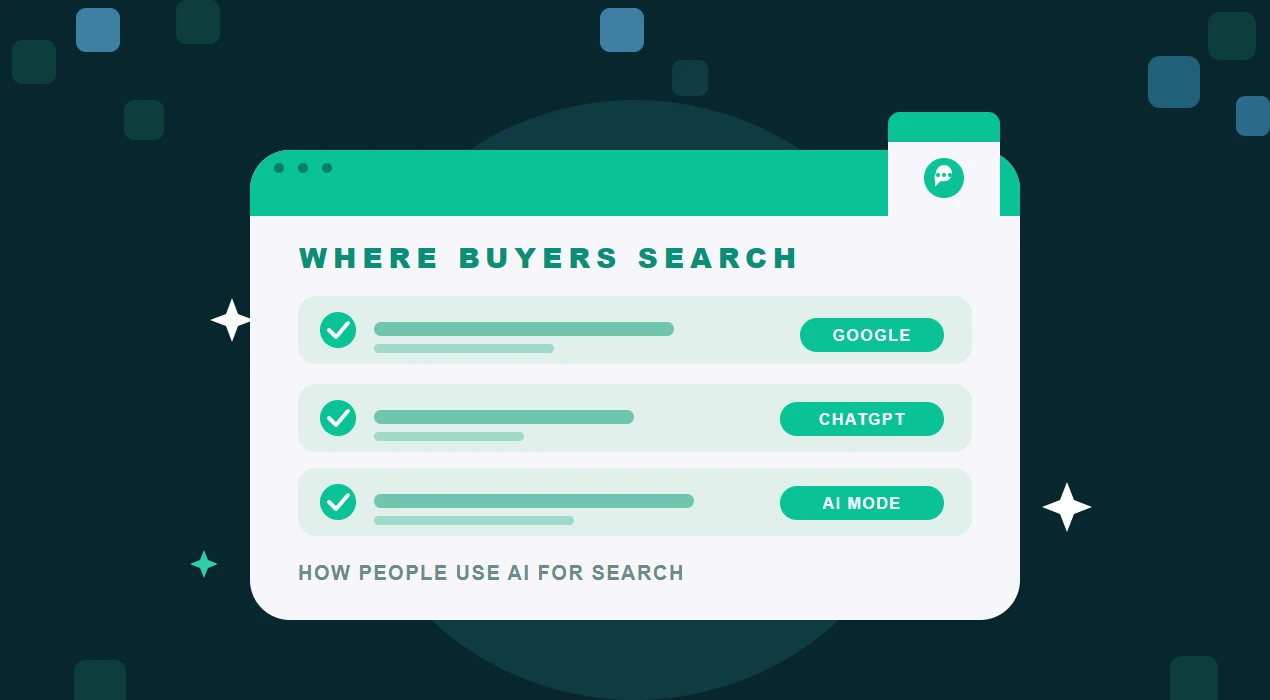
Many people expected ChatGPT to replace Google. The data says otherwise. SparkToro put Google at 73.7% of observed U.S. desktop searches in Q4 2025, and Kevin found no sign that Google use is falling. People are adding AI to their habits, not swapping one tool for another. A 2026 Pew survey of 5,119 U.S. adults found 42% had used chatbots to search for information.
When an AI summary sits at the top of Google, people click less. Pew found users clicked a normal result on 8% of visits with an AI summary, against 15% without one. In Kevin’s own AI Mode study, 77.6% of task sessions ended without a single visit to an outside website.
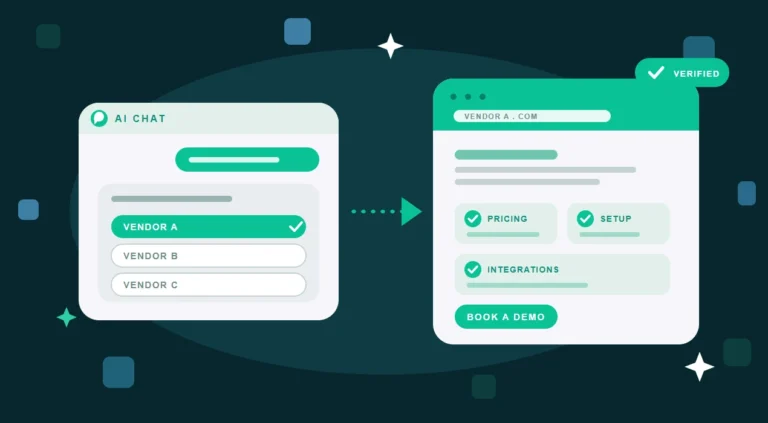
This is the finding that matters most for brands. In a study of 48 buyers doing 185 purchase tasks, the first item AI Mode listed became the top choice 74% of the time. In a survey of 200 software buyers, 62.7% of those who already had vendors in mind added another one because of AI.
AI shapes the list, but people still verify it. After an AI chat, 72.5% of software buyers visited vendor websites and 48% went back to Google. An Attentive survey of 3,054 U.S. adults found 93% of AI-assisted shoppers looked for outside proof before buying.
People are happy to let AI narrow their options, but not to hand over the final call. Gartner found 31% of U.S. consumers would let AI shortlist household supplies, while only 11% would let it make the purchase decision.
Most of the studies Kevin reviewed ran up to mid 2026. Since then, the numbers have moved fast, and they all point the same way.
ChatGPT had 900 million weekly active users in February 2026. By November 2026, OpenAI said it had 1.2 billion, with the last 200 million coming in about 60 days. OpenAI also claims ChatGPT now handles search-style questions equal to about one fifth of Google’s volume. It has not shared how it measured this, so we treat it as a claim, not a fact.
Google’s AI Mode now has 1 billion monthly users. Google says the average AI Mode query is three times longer than a classic search, and follow-up questions grew by more than 40% a month on average in the U.S.
Our reading: these are not competing trends. Google and ChatGPT are both growing AI search at the same time. For a brand, that means two big places where buyers form an opinion before they ever reach your website.
If AI builds the shortlist, the next question is how a brand gets on it. When we looked across the citation studies, three patterns stood out.
AirOps studied 15,000 prompts and found 85% of the pages AI pulled in were never cited in the final answer. Showing up in the AI’s research is only step one.
In the same data, the first page an AI retrieved was cited 58% of the time, against 14% for pages lower down. The pages that best match the question get read first and quoted most.
Kevin’s earlier Consensus Gap study found 91% of AI citations appeared in only one engine across ChatGPT, Perplexity and Google AI Overviews. Being visible in one tool says little about the others.
So what earns a citation? A study Kevin ran with Gauge found pages built on original research averaged 11.3 citations each, against 3.4 for other pages. Ahrefs also found that brands mentioned more often across the web tend to be more visible in AI, though it could not prove one causes the other.
Fewer clicks sounds like bad news. But click volume is only half the story. The other half is what visitors do once they land on your site.
Siege Media studied 78 websites with AI referral traffic. AI visitors converted at a median of 1.26 times the rate of organic visitors, and AI matched or beat organic on 72% of those sites. A separate Amsive study of 54 sites found the two convert at about the same rate, with AI still sending under 1% of all sessions.
Here is why we think this happens. By the time someone clicks from an AI answer, their basic questions are already answered. They come to check, compare and act. That is why traffic alone undercounts what AI search does for a business. Brands now need to track AI mentions, citations, qualified visits and leads as separate results.
AI search rewards brands that are easy to find, easy to trust and easy to cite. That is exactly what our GEO (Generative Engine Optimization) team works on. With EvenSurge, you get:
Building this skill in-house means hiring, training and months of ramp-up. Our team brings it from day one, for far less than the cost of one senior hire.
Want to know how AI sees your brand today? Talk to our GEO team.
Search did not die. It split. People still start on Google, but they ask longer questions, let AI hand them a shortlist, and visit websites mainly to check and act. Kevin Indig’s research shows this shift clearly, and the newest numbers show it speeding up.
The brands that win the next few years will be the ones AI already knows, trusts and names in its very first answer. The good news is that this is something you can work on today.