
Link Building
Digital SEO Land is now EvenSurge.


Broken link building is a white-hat link building tactic where you find a dead link on a relevant page, create a better replacement resource, and ask the site owner to swap the broken link for yours.
Done right, it earns backlinks from authoritative pages you otherwise couldn’t reach. Most people call it dead. The data says otherwise.
This guide walks through the full process, step by step, with the tools, thresholds, and pitfalls that separate a real campaign from a spammy one.
No hype. Just a repeatable playbook you can run.
First things first:
Broken link building is the practice of finding links that point to pages that no longer exist, then offering your own relevant page as the fix. You spot a 404, build (or already have) a resource that matches what the dead page covered, and reach out to the website owner suggesting they replace the broken link with yours.
It is also known as dead link building.
Same idea, different name.
One thing to set straight early:
This is a supplementary tactic, not a primary link strategy. It unlocks links you cannot get through standard outreach, but it will not carry your entire off-page program on its own. Treat it as one channel inside a wider plan.
The web breaks constantly. Pew Research Center found that 38% of pages that existed in 2013 were gone by 2023, with roughly a quarter of all pages across that decade disappearing.
Ahrefs studied links from 2013 onward and found 66.5% of them dead, with links rotting at around 1.3% every week.
That is not a temporary glitch. It is a permanent, structural feature of the internet. Pages get deleted, sites shut down, URLs change, and the links pointing at them quietly stop working. Broken link building exists to turn that decay into an opportunity.
In February 2026, Automattic and the Internet Archive launched a free Wayback Machine Link Fixer plugin for WordPress. When a company that size builds a tool specifically to catch and repair dead links, it tells you link rot is a mainstream problem worth solving, not a niche SEO concern.
Adoption data keeps expectations grounded. Roughly 13.3% of marketers use broken link building, and only about 5% rate it their highest-ROI tactic. Cold outreach reply rates have also fallen to around 3.43%, down from much higher a few years ago.
Read those numbers correctly. Broken link building is not a volume machine. It is a precision tactic that opens doors to authoritative domains you would struggle to reach any other way. That is exactly why it stays valuable when you run it with discipline.
Knowing how to do broken link building comes down to a clear sequence you repeat. Skip a step and the whole thing underperforms. Here are the six stages this guide covers:
Let us take them one at a time.
Pull the backlink profile of a competitor or a well-linked resource in your space using Ahrefs or Semrush, then filter for pages returning a 404. You now have a list of sites linking to content that no longer exists. These tend to be your highest-authority prospects, because the links already sit on established pages.
Point Screaming Frog at relevant sites and crawl for broken outbound links. This method usually surfaces higher volume. One documented workflow ran across 80 sites, found 340 broken links, then filtered down to 94 quality prospects. Treat that as an illustration of the funnel, not a promised outcome. Your numbers will vary by niche.
Tight budget? You can still do this. The Check My Links browser extension flags broken links on any page you visit. Google Search Console shows crawl errors on sites you own. Ubersuggest offers a lighter free tier for basic prospecting. For Indian startups and small businesses watching every rupee, this path keeps the tactic within reach without a heavy tool stack.
The best programs run both discovery methods together. Competitor analysis for authority, crawling for volume.
Not every dead link deserves your effort. Before you touch outreach, filter your list against clear thresholds:
Chasing every broken link you find burns hours for links that do nothing. We build campaigns around real outcomes, not vanity metrics, and qualification is where that discipline starts. A smaller list of strong prospects beats a bloated list of weak ones every time.
Here is the step most people skip, and it costs them credibility. A link that looks broken is not always a clean 404. It might be caught in a redirect chain, sitting behind a soft 404, blocked by a canonical issue, or simply pointing to a page whose content changed while the URL still works.
Check each prospect before you pitch. Nothing kills a reply faster than telling an editor a link is broken when they can click it and see it works fine. Verify, then reach out.
This is the non-negotiable step beginners rush past. Before you can offer a replacement, you need to know what the dead page actually contained.
Head to the Wayback Machine at web.archive.org and paste in the broken URL.
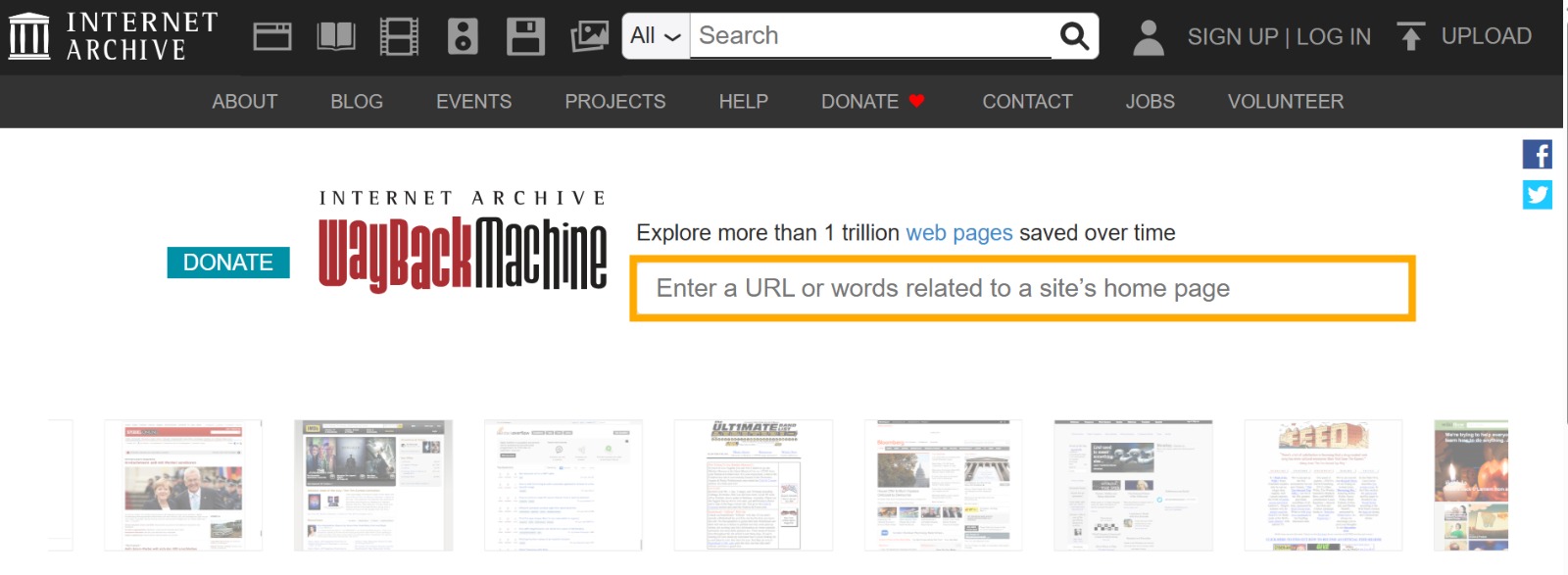
You will usually find archived snapshots of the page as it existed.
Study the format, the depth, and the intent.
Was it a data study? A tools roundup? A step-by-step tutorial?
That context decides what your replacement needs to be. The Internet Archive has rescued roughly 15% of otherwise-dead pages, which makes it the single most useful free tool in this entire process.
Match the original’s format, then make it better. A tools list needs a tools list, not a 500-word opinion piece. A 3,000-word guide needs a resource of equal or greater depth. Understand what earned those links in the first place, then produce something in your own words that does the job better. Copying the archived page is both lazy and risky. Rebuild it properly.
Content quality is the differentiator in 2026. This is where good campaigns pull away from spam.
Editors will not swap a broken link for something weaker than what they had. Editorial rejection has climbed roughly 33% since 2023, driven largely by a flood of thin, AI-generated content. That raises the bar for everyone. Your replacement has to earn the placement on merit.
Give the linking page a reason to say yes. Match the search intent the original served, then add something the dead page lacked: fresher data, clearer structure, better examples, or genuine expertise on the topic. This ties directly to E-E-A-T. Pages that show real experience and authority get linked and stay linked.
This is where strong content capability pays off. We approach replacement content the same way we approach any content asset: built to be the best answer for that query, not just good enough to swap in. When the resource genuinely deserves the link, outreach gets far easier.
Time for the honest part of the numbers. Cold email reply rates sit around 3.43% and keep sliding. Editors ignore or delete generic templates they’ve seen a thousand times. What moves the needle is personalization and disciplined follow-up. A single follow-up can lift replies by roughly 65.8%, and reaching out twice has been associated with a 93% increase over one attempt.
Modern outreach follows a few rules:
The ethical frame that works: give the fix first, then make the ask. You are helping them repair their page, and your link happens to be the fix.
Rather than handing you a script to paste, here is the structure of a broken link building outreach template that performs. Open with a genuine, specific line about their page. Point out the broken link, naming the exact spot. Then mention you have a resource that covers the same ground and would work as a replacement.
Layer your personalization in three parts:
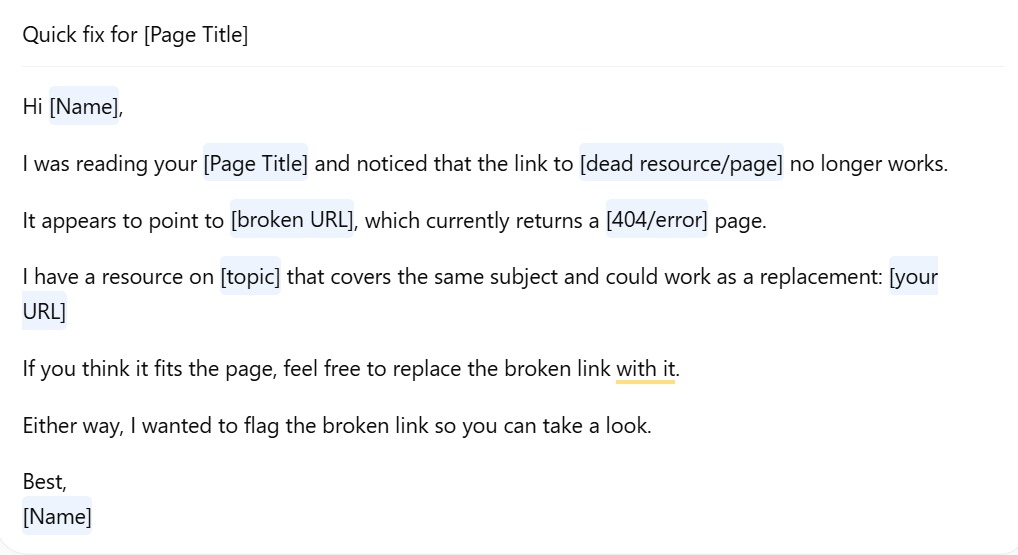
When you have extra context to offer, lead with more value. Maybe you spotted two or three broken links on the same page, or you have additional data that strengthens their content. Flag the fixes first, make yourself useful, then introduce your link as one part of a helpful message rather than a cold ask.
Send one, maybe two follow-ups. No more. Keep each one brief and specific: a short nudge referencing your first message, not a fresh pitch. Space them a few days apart. People are busy, and a polite reminder often gets the reply the first email did not.
Guidance beats copy-paste here. The templates that once worked are burned out because every editor sees them daily. Write like a person who actually read their page.
Track email to link conversion so you know what is working.
Typical rates land between 3% and 8%, and campaigns with a strong, genuinely relevant replacement have been reported as high as around 22%. Treat those as directional ranges, not guarantees. Your niche, your content, and your outreach quality all shift the outcome.
Look past the vanity numbers. What counts is links landed, new referring domains gained, and the downstream authority those links build. We report on the metrics that connect to visibility and business results, not open rates that make a dashboard look busy. Clear reporting keeps a campaign honest and shows whether the effort is paying back.
A quick checklist of what sinks campaigns:
Most of these come down to one thing: rushing the quality-first parts to save time. Do not.
It is labor-intensive, hard to scale, and success is never guaranteed. You will send messages that go nowhere and chase links that never land. That is the trade.
What you get in return is access to genuinely authoritative domains through a clean, white-hat method that carries no penalty risk. For that reason, it earns its place as one channel inside a wider link building and content strategy rather than a standalone plan. Run it with discipline, pair it with strong content, and it delivers links that hold their value.
Want the backlinks without the hours of prospecting, verifying, and outreach?
See how our white-hat link building works, or request a free link building proposal, and we will show you how a tailored, transparent campaign fits your goals.